QuickBooks reports
and dashboards
Bring your QuickBooks data into Filament. Create dashboards, build reports and explore your questions in plain English.
Your QuickBooks data, connected.
QuickBooks tracks your income and expenses. Connect it and we sync your invoices, bills, payments, customers and accounts into your warehouse so you can report on profitability and cash flow alongside everything else.
Data we sync
InvoicesExample fields: Number, Customer
Sales invoices and their status.
NumberCustomerDateTotalBalance
PaymentsExample fields: Date, Amount
Payments received.
DateAmountCustomer
BillsExample fields: Vendor, Date
Bills from your vendors.
VendorDateTotalStatus
CustomersExample fields: Name, Balance
Who you invoice.
NameBalanceEmail
VendorsExample fields: Name, Balance
Who you pay.
NameBalance
AccountsExample fields: Name, Type
Your chart of accounts.
NameTypeBalance
ExpensesExample fields: Date, Amount
Money spent.
DateAmountAccountVendor
QuickBooks works well with

Google Ads
Connect QuickBooks revenue data with Google Ads campaign spend to see which keywords and ad groups generate paying customers, not just clicks. Track cost per acquisition against actual invoice amounts and customer lifetime value.

HubSpot
Connect QuickBooks invoices and payments with HubSpot deals and contacts to analyze which lead sources convert to revenue, how long sales cycles take from first touch to payment, and which customers have outstanding balances.

Stripe
Connect QuickBooks accounting records with Stripe payment processing to reconcile online transactions against your books, track payment method preferences by customer segment, and identify discrepancies between payment gateway and accounting data.
See the
whole picture.
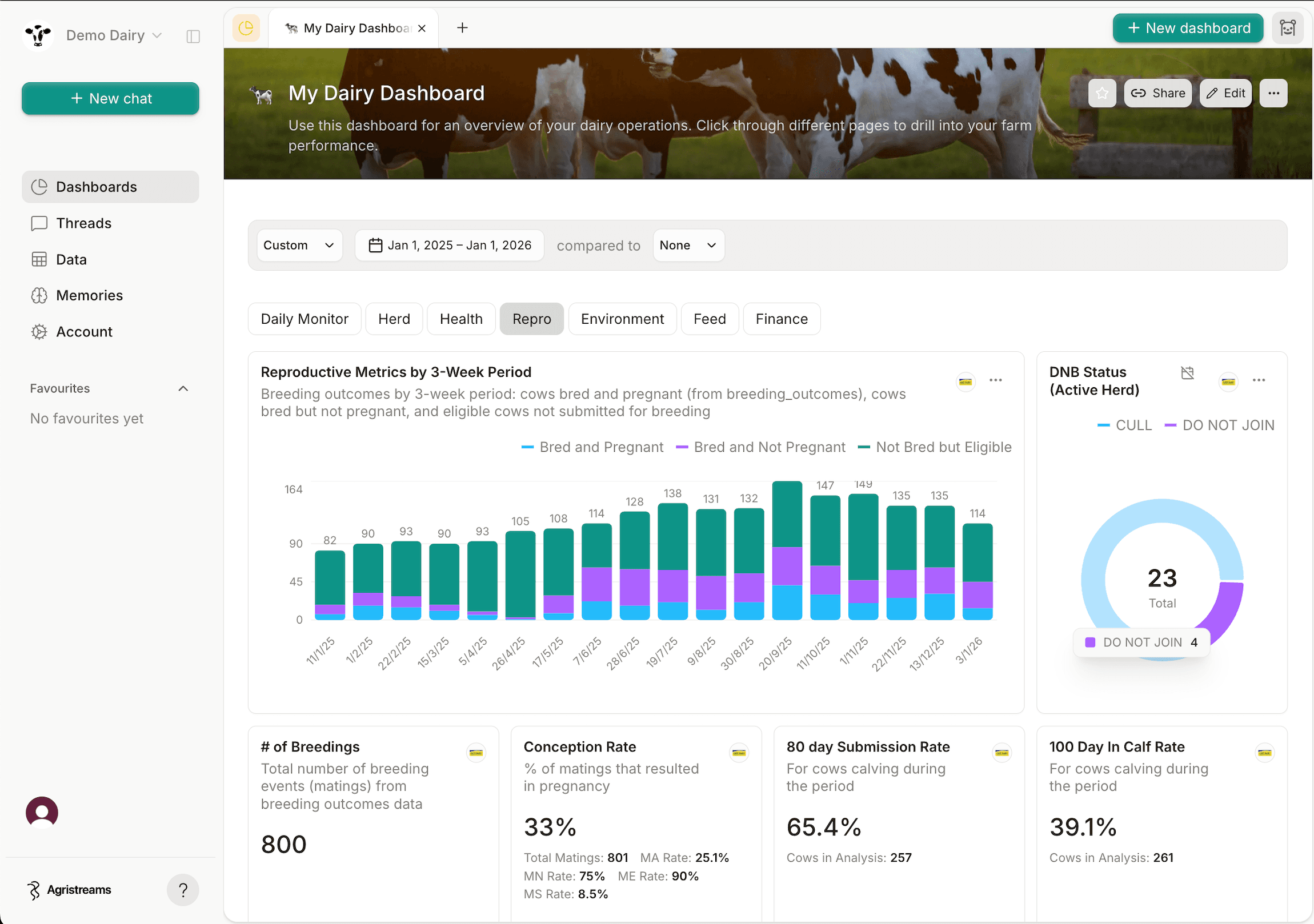
Filament brings your apps together in a managed warehouse. Build dashboards, share reports and ask questions in plain English.
Explore the demo dashboard$118,050 of $245,000
194 of 250
Your questions, answered.
How do I connect QuickBooks?
This connection uses Fivetran.
You need a QuickBooks Online administrator account, an Intuit developer account, and access to the email address that receives Intuit’s confirmation codes. Use a live company; this connection does not support sandbox companies. Connect each QuickBooks company separately.
Create your Intuit app
- Sign in to Intuit Developer. Open My Hub → App dashboard → + → Get Started and name your app.
- Select the accounting permission,
com.intuit.quickbooks.accounting, then Done → Confirm → Open app. - Open Keys and credentials → Production → App details. Supply your own end-user licence agreement and privacy policy URLs, then enter these settings:
| Setting | Value |
|---|---|
| Host domain | fivetran.com |
| Launch URL | https://fivetran.com/ |
| Disconnect URL | https://fivetran.com/dashboard |
| App category | Data Management |
Enter your country and IP address. Complete the regulated-industries question for your business; the connector’s standard setup uses None of the above.
Complete production access
- Open Compliance → Start questionnaire. Under App Information, select the option explaining that you were asked to create an app to connect QuickBooks.
- When asked for the connection instructions URL, paste
https://fivetran.com/docs/connectors/applications/quickbooks/setup-guide#setupinstructions. This is a value Intuit requires in the form. - Finish the questionnaire using your business’s details, then select Create a Production Key.
- In Settings → Redirect URI, add
https://fivetran.com/integrations/quickbooks/oauth2/returnand save. - Copy the production Client ID and Client secret from Keys and credentials. Keep the secret private.
Connect in Filament
- Open Apps in Filament and add QuickBooks.
- Enter the production Client ID and Client secret in the connection form.
- Select Authorize, sign in to QuickBooks, choose your company and approve with Connect. Start and finish authorisation from this connection form.
- Select Save & Test, resolve any reported errors, then return to Filament and complete setup.
How often does it update?
Automatically each day, once connected.
Which QuickBooks KPIs can I track?
Receivables ageing: outstanding invoice balances grouped by days overdue. Revenue by customer: compare recorded income using a consistent cash or accrual basis. Expenses by category: group recorded expenses by account, avoiding duplicate transaction lines. Gross margin: revenue less cost of goods sold, divided by revenue. This depends on consistent account classification.