Connect Deputy to Agristreams
Deputy runs your rostering and timesheets. Connect it to Agristreams to track labour hours and cost across the farm, and see how they line up with production and the season.
What we sync from Deputy
Agristreams brings your Deputy records into your warehouse so you can report on them alongside the rest of your farm.
Employees
One row per employeeYour team.
Timesheets
One row per shift workedHours worked, with cost.
Rosters
One row per scheduled shiftPlanned shifts.
Leave
One row per requestLeave requests.
Locations
One row per locationWhere your team works.
Works well with Deputy
Connect these alongside Deputy to get a complete picture of your farm.


How it works
Connect Deputy once and Agristreams handles the rest — from sync to dashboards.
1. Connect your data
Securely connect Deputy and Agristreams syncs your records into your own managed warehouse, automatically.
2. Ask in plain English
Ask Aggie questions about your farm the way you'd ask a colleague — no formulas, no SQL, no spreadsheets.
3. Get instant dashboards
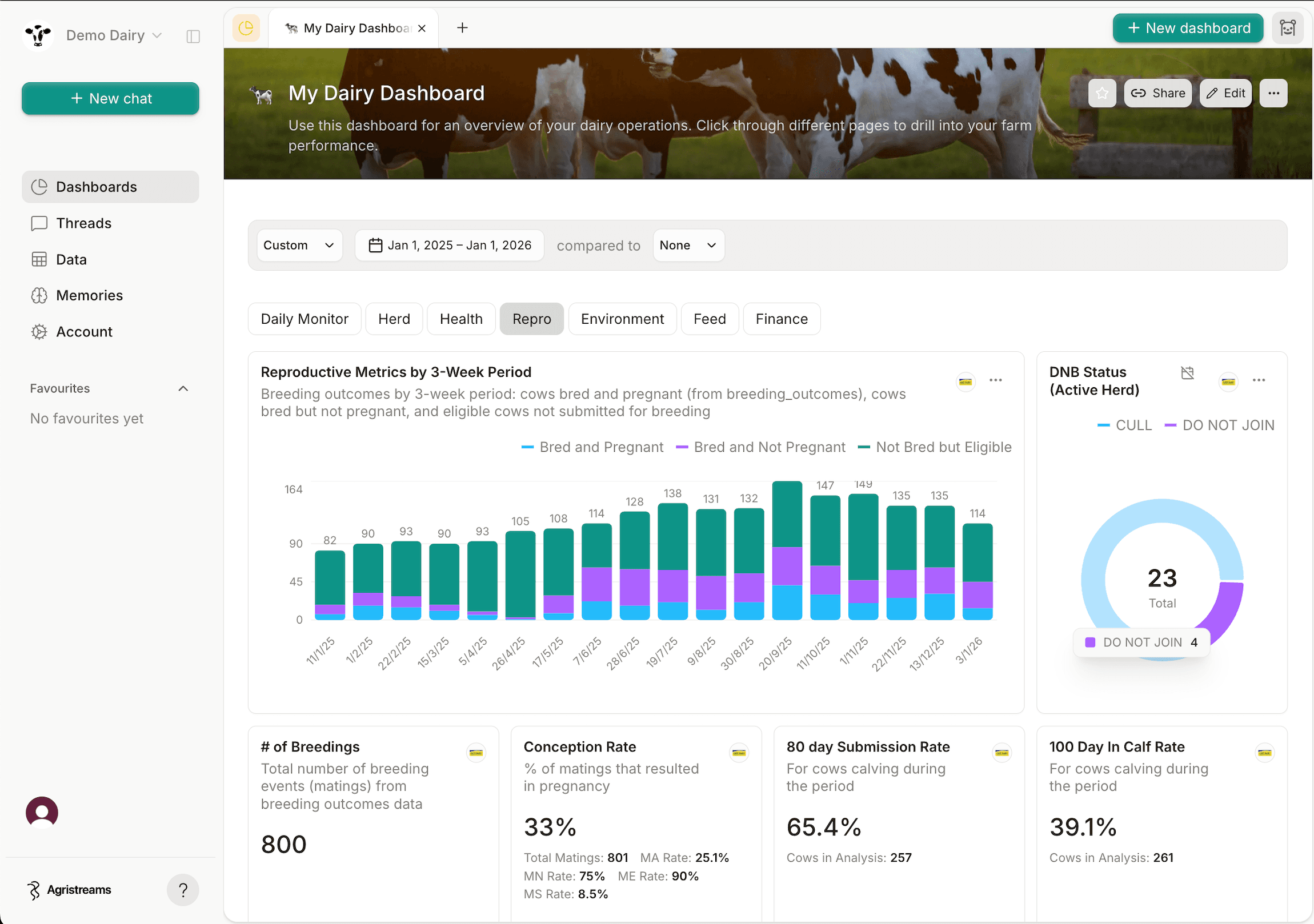
Get back charts and reports you can save, share, and revisit as your data keeps syncing in the background.
Questions & Answers
Ready to connect Deputy?
Book a demo and we'll show you exactly what your Deputy data looks like through Agristreams.